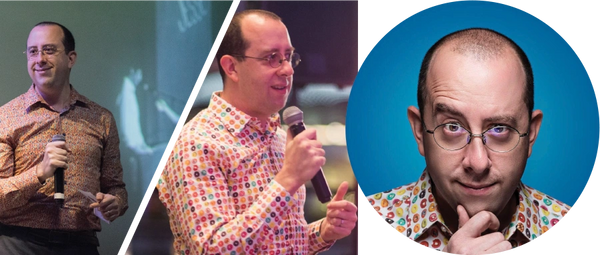
Jon Siegel // 米岡 ジョン : Creative Director
  • Featured Content
  • May5th

    Finally got around to tidying up my Flickr account into “Collections”. Check ‘em out:

    http://www.flickr.com/photos/jonsiegel/collections/

    Going to start separating my Chinatown and Little India shots into their own series(sets).

    Often I get into discussions about Flickr and why I continue to stay with them. I have many reasons for this, but thought I’d share my top 5 here:

    1. Flickr got me thinking harder about my shots, the Flickr community encouraged me to carefully consider what I wanted to say with photography. I’m telling a story with my shots, and Flickr has become the best platform for me to do this.

    2. Changed my mindset about content sharing. I select only 1-2 photos per day to share, no more than that, rather than dumping several photos at once into my photostream. When I first joined Flickr, I noticed that uploading several photos at once would always result in fewer views and comments. I’m not out for view count or comments, but when I was just getting started, this was a good lesson in photo spamming. No one wants to look through 10+ photos of slightly different angles of the same subject, or 50+ photos of a trip to the icecream shop.

    3. Choose only the best to share. I won’t share random snapshots, I look through hundreds of photos every week and select only the few I think are worth sharing. Before Flickr, I would share hundreds of photos without thinking twice.

    4. Started writing again, which led to this blog(which I update infrequently, but that’s not the point). I enjoy writing when I have the time and it helps me lace my tale together. Flickr allows me to present this content to my audience in a format easy to access and digest.

    5. An incredible high quality community of photographers. I have made so many photographer friends through Flickr, and that alone is reason enough to stick with it. Photography brings the world together.

  • April3rd

    The other day, as I made my way to the train station, rather than enter and go home, I walked past it and kept walking. Took a left turn, and parked myself across a busy sidewalk from a Chinese medicine shop. I stood there, relaxed and waited for a bit, for the right person or couple to wander past so that I could take the shot. It was an oddly natural feeling, to break away from what has become routine and step back into photography which has always been my escape.

    At last a few good subjects passed by and I took a few good shots. Deadlines looming and a lack of sleep eventually persuaded me from my moment and back to the train station to go home. Point being, no matter the pressure or the commitments, we must always make some time each day for our art.

  • January29th

    Boingboing posted my photos from Thaipusam in Singapore! Link

  • January19th

    Lately I realized that I do not generally share a lot about myself online besides my photos. One of the pitfalls of social media, is that it can be rather deceptive when used as a tool to analyze a person and their activities, and unless you are a skilled detective, it is doubtful that you will be reading between the lines. After talking with a few people, and receiving some unwanted critical feedback, I am beginning to wonder if, because I only really share my photography online, that the way I am perceived is as someone who cares only about photography and nothing else. Or perhaps, I am viewed as a guy with a little too much free time. This is incorrect, and I worry that the same may be asked of my friends who work full time jobs or run their own companies who also shoot for pleasure and hobby. Here are some tips, or clues, to better understanding a little about a coworker or friend who is also a diligent hobbyist photographer:

    1. Find the EXIF data of their photos, this is generally easy as social media sites like 500px and Flickr have functions that will display this for each photo uploaded. Compare at least 4-5 shots taken that look like they were taken at different times of day.

    Look for the line that says, “Taken on” followed by a date and time. That is the day and the time of day at which the photo was taken. Look at a few morning photos and check the time. Notice something? Perhaps they all were taken between the 8AM and 9:30AM, even though they look like they might have been shot in the middle of the day or late in the morning. The hobbyist photographer is taking a few shots along his morning commute to the office. He is not sneaking out to take these at 11AM! ;)

    If, after looking through a handful of EXIFs, you notice several shots taken in the afternoon, see if they correlate to the same times the person is taking their coffee breaks. Try to understand that for some hard working folks like myself, taking photos is a release. It is like taking a smoke break, it gives us a chance to breath and relax, to have a little personal time. Do not be overly critical of this, ask yourself if you are ready to scold your other co-workers or friends for taking a smoke break? Probably not.

    2. Check the contents of the photos. Are the locations familiar? Perhaps they look like locations around your office area. Are they?

    If so, then it is clear the person is not going far and staying nearby, simply using their break periods to shoot a few pictures and practice. Not unlike your boss who does not realize you are watching him practicing his golf swing by the water cooler. This is our way of letting off a little steam as well, sometimes I’ll shoot during a coffee break when I feel frustrated and need something to get my mind off a subject. Some cameras have a GPS function and the location of photos are sometimes embedded in the EXIF. That provides another clue that the photographer was not far off from their workplace.

    If the shots look like they were taken halfway across town in the afternoon on a day when that person should be working hard on a project, then there may be a problem.

    3. When you “Google” the person’s name, are you only finding his photographs? Nothing more? Perhaps you did not know that I also enjoy making 8-bit electronic music in my spare time as well? Or that I love cooking and spend a lot of free time learning about ingredients and cooking techniques.

    Although you may only see photos being shared online, this is not the whole story. Social media gives the false impression that everyone is now sharing every aspect of their lives online. This is fortunately far from the truth. As much as Facebook and Google would like you to share so much of your life online, which is valuable data for them to collect and sell, you are, in the end, only human. There is only so much time you have in your life, and as technology is still limited, you can realistically share only so much. If anything, I want only the best I have to offer to be seen and shared online. While I love design and advertising, it’s my profession, I cannot share much of what I do online without breaching contracts or potentially confusing my clients. As my life gets increasingly more complex and challenging, I want to simply where I can, so I stick to sharing my favorite hobby only, and keep the rest as part of my professional life which I feel currently has no place in social media.

    My love for photography and my style of photography emerged as a result of my morning and evening commute between my office in the back of Shibuya and Shibuya Station. That walk takes about 7-10~ minutes to and from. I wanted to capture how interesting the people and environment around my office was, so I would carry my camera to and from my office every day. After years of doing this, I developed a style and a love and respect for the medium. No doubt this experience is mirrored by many others like me.

  • November10th

    Initially I wrote back with a bit of a long reply to someone who kindly wrote to ask whether a switch from cropped sensor to full frame would make a substantial difference in their photography. I got a little carried away and included a few other tips about my own personal journey in photography. Tips which I thought I might as well share here. The first and most important tip, join a photography social network like Flickr and begin posting and commenting on other people’s photos.

    I learn everything from my peers. Through Flickr I have met countless photographers over a drink and learned invaluable ideas and techniques from them which I apply to my art. Photography is as much a social activity for me, as it is also a solitary activity. Travel to places where your favorite photographers reside, don’t be shy, contact them and invite them to hang out over a drink. Traveling, meeting other photographers, and participating in an online photography community are the three activities which form the base of my own learning process. New equipment is no replacement for life experiences which shape the way we think and perceive our environment.