Design process01—05
The double diamond becomes a continuous diamond.
It was drawn at a time when code used to be poured concrete—expensive and rigid. Today, it behaves like clay, where building is often the fastest way to discover what shape a product should actually take.
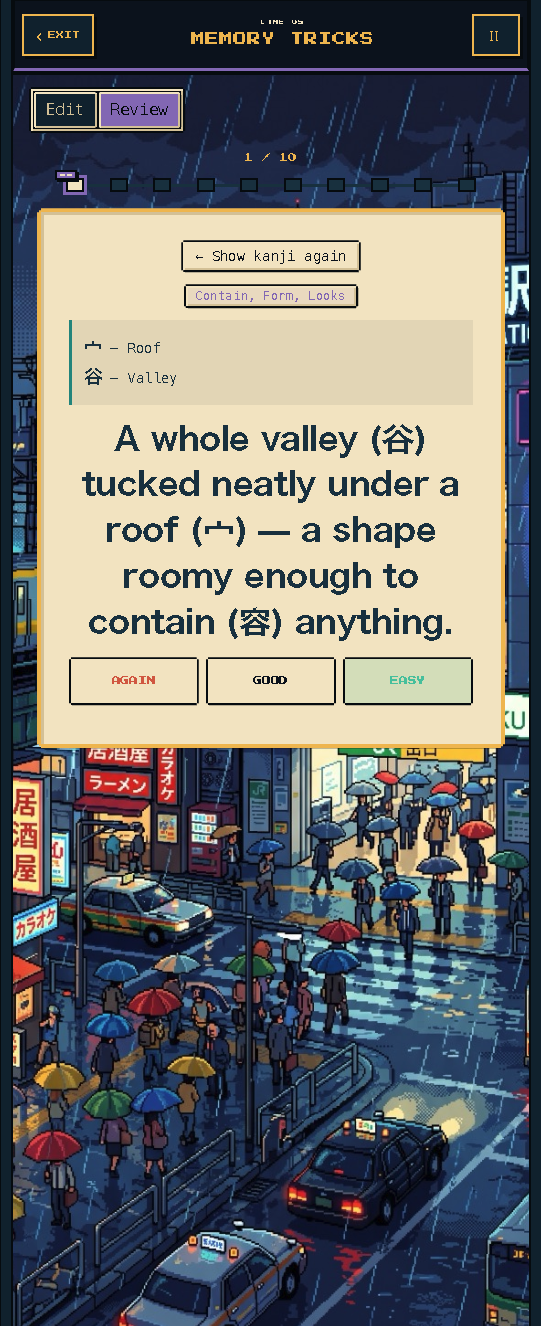
I saw this firsthand while developing a Kanji app for my personal Japanese study. I studied language app learning and design patterns, studied memorisation techniques and best practices, then built a rapid prototype of the app. Weekly feedback—from my teacher, classmates, and wife, alongside AI agents challenging my assumptions—turned discovery, design, and engineering from rigid sequential phases into a continuous, living rhythm.
Working with AI introduced a new friction: while it happily generates valid designs, it frequently bloats scope with unnecessary extras. In the end, I got a tighter result designing by hand in Figma, then pulling it into VS Code via MCP to refine.
Now that anyone can generate anything, AI easily produces competent, average work. What separates a great product from an automated one isn’t speed—it’s taste and craft.
Taste is knowing what a problem actually needs and what to leave out, while craft is the fluency to execute that choice with excellence. True taste can’t be automated; it is earned through years of practicing the craft.